
Subscriber Refill vs Returning Viewers on YouTube
Subscriber refill terms describe an after-sales arrangement, while returning viewers depend on a useful reason to watch again. Explore what to clarify about coverage and what evidence to preserve, then build a coherent next-video sequence. A bicycle-maintenance example connects complete tutorials without confusing a retained count with genuine interest in future uploads.
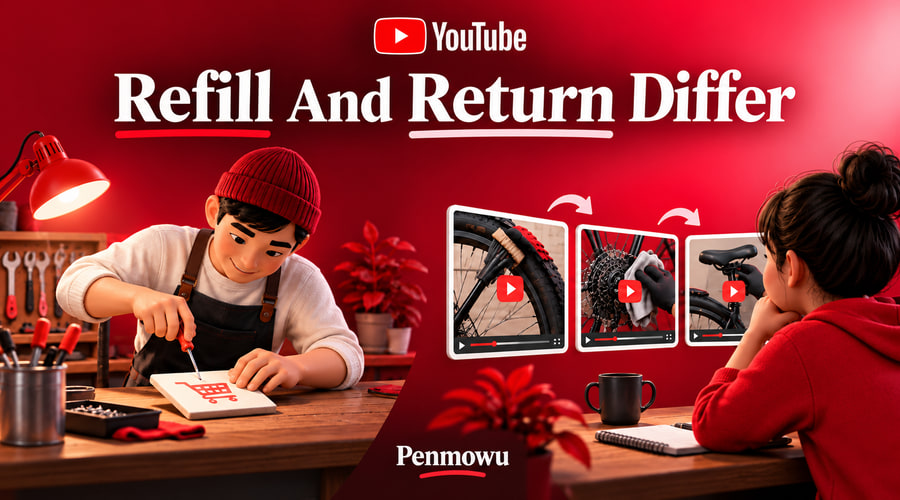
A YouTube subscriber refill condition concerns a service order; returning viewers concern whether people choose to watch your content again. Treat those as separate questions. Replacing a count, where the selected terms provide for it, does not create an interest in the next upload.
The Penmowu YouTube subscriber rows include varying support descriptions. Read the actual offer rather than inferring identical coverage from the subscriber category or a reassuring adjective in a title.
Understand what the term leaves unanswered
Ask what condition qualifies for review, what period applies and what evidence is needed. If the row mentions a coverage period, clarify how it is measured and what exclusions matter to your channel.
Do not assume a refill is a refund, a permanent count or a promise of engagement. Those are different arrangements. An unclear term should be resolved before payment rather than interpreted after a problem appears.
Preserve a usable order record
Keep the service ID, channel destination, approved quantity and the conditions displayed when you ordered. Record a relevant starting observation with a timestamp, then keep later observations tied to the same channel and counter.
For example, if the team observes a decrease after several uploads and another promotion, its support record should say what changed and when. It should not automatically assign every movement in the count to one order.
The purpose of the record is to support a precise question. It cannot independently identify the cause of every subscription or departure.
Give a viewer a reason to return
Now consider the separate content task. A channel that publishes an excellent first tutorial but unrelated material afterwards gives the interested viewer no clear continuation. Plan the next useful question for the same audience.
For an illustrative bicycle-maintenance channel, a video on checking tyre condition could lead to one on choosing the correct replacement specification, then one on installing it. Each video should finish its own task. Do not withhold the answer simply to force another view.
Review content continuity with three questions
Who benefited from the last video?
Improvement it can reveal: A clearer intended audience.
What practical problem comes next?
Improvement it can reveal: A relevant follow-up subject.
Can viewers find that follow-up?
Improvement it can reveal: A better channel and content path.
This planning method does not promise a particular viewing result. It helps the creator produce work that makes sense as a sequence.
Report the two activities honestly
The service record can describe the order and any after-sales review. The audience record should describe actual viewing observations and genuine questions. Combining them can imply that retained subscribers are necessarily interested returning viewers, which the count does not establish.
If your immediate question concerns a drop, use the original order terms and evidence. If it concerns a quiet next upload, examine the content's relevance and presentation.
Compare subscriber refill descriptions for the first decision, and build a coherent next-video plan for the second. Keeping those purposes distinct makes both the purchase and the channel strategy more useful.